
Blog
September 12, 2025

The forthcoming Payment Services Directive 3 (PSD3), together with the Payment Services Regulation (PSR), will introduce far-reaching changes to the regulation of financial services across European payments. For existing payment service providers, a central question arises: What does grandfathering under PSD3 mean and how will the new rules affect licences and authorisations already granted? The answer lies in the so-called “PSD2 grandfathering” provisions within PSD3, which enable a structured transition to the new legal framework.
Grandfathering refers to the rules under which existing licences and authorisations of Payment Institutions (PIs) and E-Money Institutions (EMIs) remain valid under the new PSD3 regime – but only for a limited period and subject to specific conditions.
The European Commission has recognised that an abrupt switch to the new licensing regime would cause significant market disruption. Accordingly, Payment Services Directive 3 (PSD3) sets out detailed transitional provisions in Articles 44 and 45, covering different categories of market participants. In parallel, the Payment Services Regulation (PSR) defines additional technical standards for implementation.
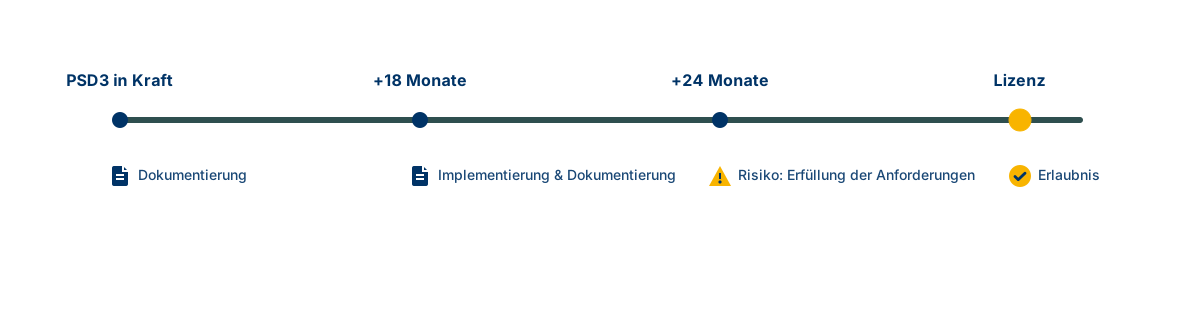
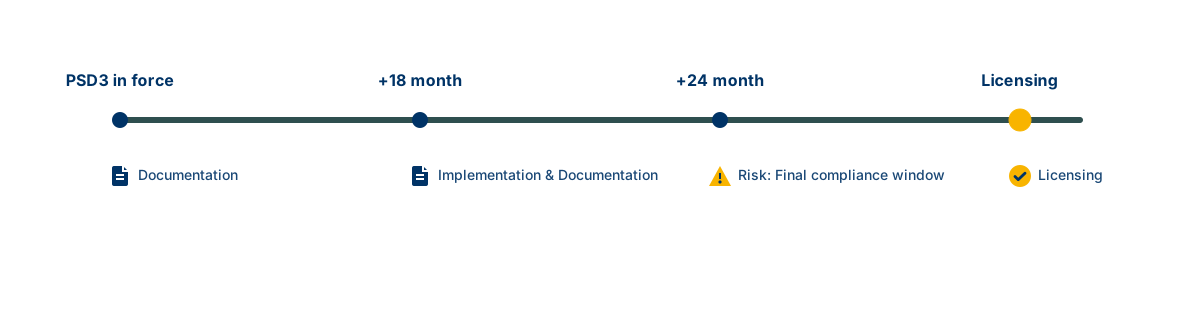
Existing payment institutions benefit from a phased transition period:
Payment institutions authorised under Article 11 of PSD2 up to 18 months after PSD3 enters into force may continue to provide their licensed payment services without a new authorisation for up to 24 months.
Grandfathering is not a free pass. Institutions must submit all necessary information to the competent authorities within the 24-month period to evidence PSD3 compliance. In Germany, BaFin is coordinating PSD3 implementation and will publish corresponding guidance on evidentiary requirements.
Two possible scenarios:
E-Money Institutions (EMIs) authorised under Directive 2009/110/EC receive similar transitional rights. Of particular relevance: under the new framework, EMIs are treated as payment institutions, requiring an adjustment to their licensing set-up.
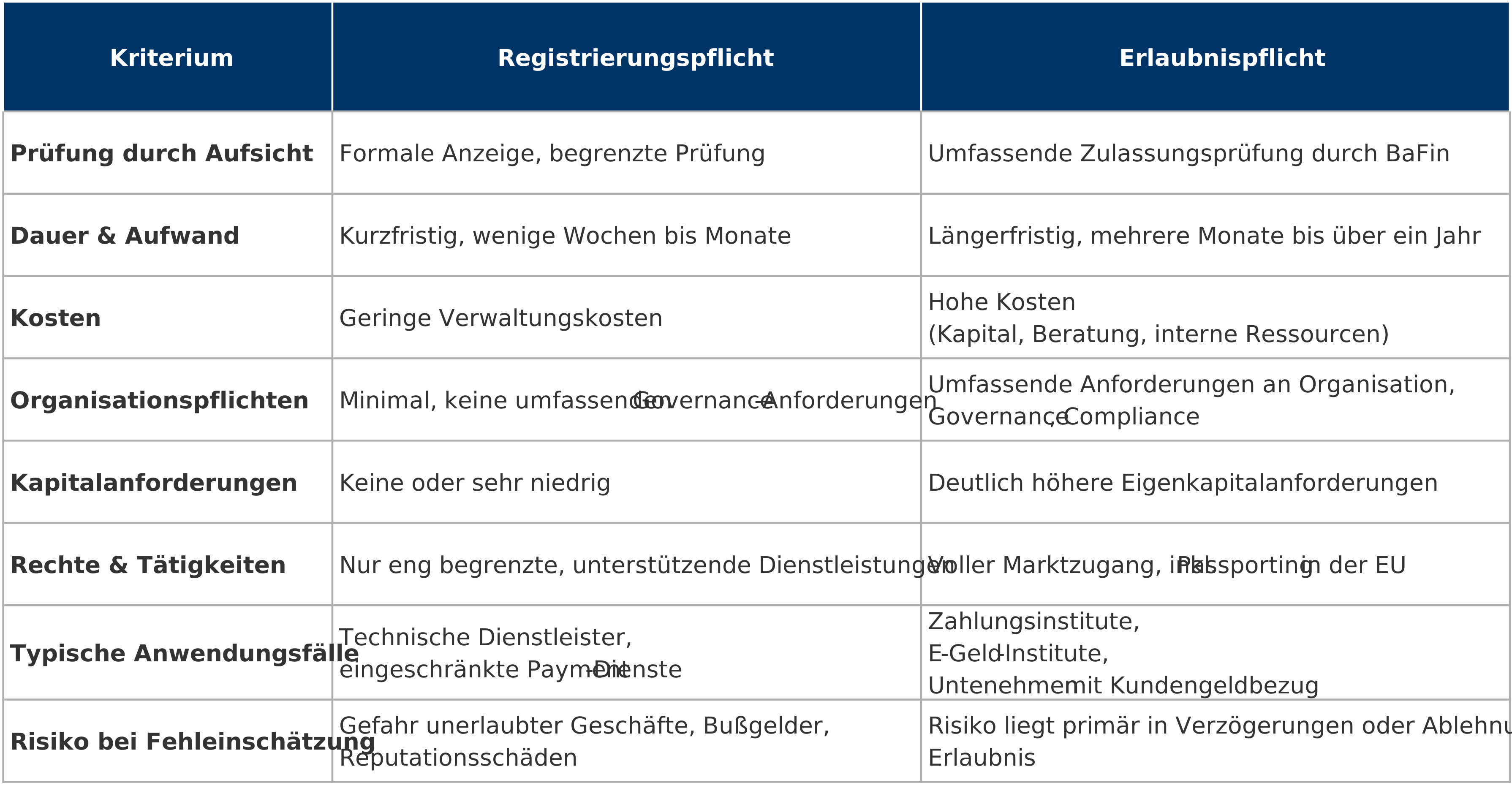
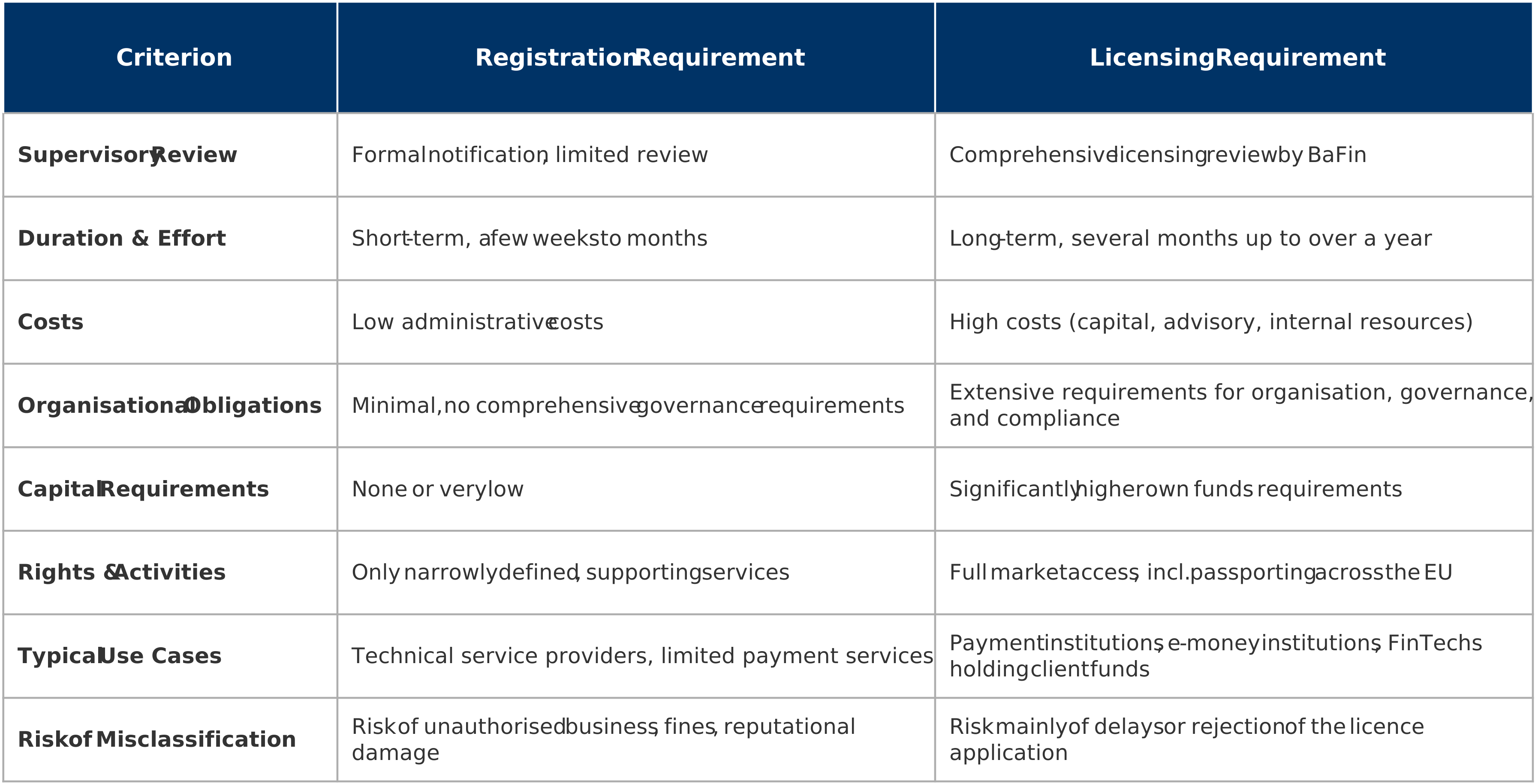
Firms that previously benefited from PSD2 exemptions (Article 32) may either:
Starting point: A German fintech start-up with 15 employees has used the de minimis exemption under section 2(2) ZAG since 2019 (monthly payment volume below EUR 1 million).
PSD3 challenge: The previous exemption is expiring while compliance requirements have increased.
Strategic options:
Starting point: An EMI with an e-money licence under Directive 2009/110/EC offering both e-money issuance and payment services.
PSD3 transformation: Mandatory reclassification as a payment institution, as EMIs are no longer regulated separately under PSD3.
Compliance effort: Full review of the licensing set-up and alignment to PI requirements by the 24-month deadline.
Starting point: An established PSP with full PSD2 authorisation across multiple EU Member States.
Grandfathering advantage: Seamless transition possible where compliance standards are already high.
Focus: Optimising existing processes and early alignment with tightened requirements.
Immediate actions:
Specific challenges:
Recommended approach:
Strategic focus:
Action plan:
Absent or insufficient PSD3 compliance leads to severe consequences:
The transition periods may appear generous, but the complexity of PSD3 requirements demands an early and structured approach. Risks arising from inadequate PSD3 preparation include not only operational disruption but also substantial reputational damage with clients and partners.
While the PSD3 Directive contains the grandfathering provisions, the parallel Payment Services Regulation (PSR) brings additional requirements that must also be factored into transition planning.
The PSD3 grandfathering provisions are more than mere transitional rules – they provide an opportunity to strategically reposition your payments business.
Successful firms use the transition period to:
The 24-month period may seem long, but experience shows that complex compliance projects take considerably more time than initially planned. Firms that start preparations now have a markedly higher chance of success.


Let’s review together how you can put regulatory requirements into practice – efficiently and effectively
30 minutes for more clarity – book your appointmentFree & non-binding · 30 minutes · Remote
