FIT & PROPER for international business managers: Systematic preparation for approval by competent authorities

How an East Asian Managing Director was successfully prepared for BaFin authorisation – with tailored onboarding, strategic supervisory communication, and practical experience

Asian Corporate Bank

The project at a glance

Fit & Proper - At a Glance | Finoventis

The Problem

A German banking subsidiary needed to prepare an international managing director from the East Asian parent company for BaFin authorisation. The challenge: no experience with German regulation, cultural differences in governance understanding and a tight timeframe of no more than 12 months alongside ongoing day-to-day business.

The Solution

Finoventis developed a 3-pillar approach: (1) Tailored training in over 20 regulatory areas, (2) Practical qualification through appointment as general authorised representative with comprehensive job shadowing, (3) Proactive supervisory communication with strategic interim presentation after six months.

The Result

Successful BaFin authorisation within the planned timeframe. The managing director was able to act fully from the first day of taking office – without further induction time. The bank received not only a formally authorised but also a comprehensively qualified managing director with a deep understanding of German regulatory requirements.
Fit & Proper for International Managing Directors | Case Study | Finoventis

Initial Situation

A mid-sized commercial bank based in Germany – a third-country branch of an Asian banking group – faced an important strategic personnel decision: an experienced managing director from the East Asian parent company was to assume management of the German branch. The candidate brought extensive leadership experience from other international locations but had no experience with German and European banking regulation.

The central challenge: within one year, the designated managing director had to demonstrate professional suitability in accordance with the requirements of BaFin's "Guideline on the Suitability of Managing Directors" – both theoretically and practically. This encompassed not only knowledge of German and European banking law but also a deep understanding of the specific requirements for managing directors of a regulated German credit institution.

The bank commissioned Finoventis with the design and implementation of the entire Fit & Proper process – from developing the onboarding plan to successful authorisation by BaFin.

Particular Challenges

The Fit & Proper process for an international managing director differs fundamentally from preparing a candidate with German banking experience:

Regulatory Complexity

German banking supervisory law is highly complex and differs significantly from regulatory approaches in other jurisdictions, particularly those in the Asian economic area. The candidate not only had to build theoretical knowledge but also develop a practical understanding of applying regulations – from the CRR through MaRisk to institution-specific requirements.

Time Pressure with Ongoing Business Operations

During the initial phase of preparation, the designated managing director remained responsible for his previous duties as managing director of another branch. The onboarding therefore had to be structured to align with his commitments – without compromising the quality of preparation.

Cultural and Linguistic Aspects

Conveying complex legal concepts in a foreign language and understanding the specific governance culture of German banks required a particular didactic approach.

Supervisory Expectations

BaFin and the Bundesbank place particular emphasis on demonstrating theoretical and practical knowledge when examining managing directors without German banking experience. Training certificates alone are insufficient – the candidate had to demonstrate that he understood German specifics and could apply them.

Strategic Risk

Failed authorisation would not only have jeopardised the bank's succession planning but could also have strained the relationship of trust with the supervisory authorities. The approach therefore had to be designed for success from the outset.

Solution Approach

A multi-stage approach was developed that combined theoretical learning, practical experience, and strategic supervisory management:

Phase 1: Design of a Tailored Onboarding Plan

First, a comprehensive gap analysis was conducted: What knowledge and experience did the candidate bring? What requirements does BaFin specify? Where were the largest knowledge gaps?

Based on this, a structured onboarding plan was designed with three parallel pillars:

3 PillarsTheoryPracticeCommunication

Pillar 1: Theoretical Foundation Through External Training

Together with a specialised training provider, a tailored curriculum was developed covering all essential regulatory areas. The training was designed as a hybrid format – partly online for maximum flexibility, partly in person for personal exchange and deepening of complex topics. The training block began in October and extended over several months until spring.

Training Content Overview
Basel II/III/IVHGBLiqVCRRGerman Banking ActRechKredVIFRSGDPRMaRiskFederal Data Protection ActRemuneration Regulation for InstitutionsBAITEBA GuidelinesCorporate GovernanceSinge Supervisory Mechanism (SSM)Anti-Money LaunderingLaw (GWG)TopicsSREPSolVDORA

Pillar 2: Practical Experience Through Job Shadowing and Operational Integration

Theory alone is insufficient. To provide the candidate with practical insights into the daily work of a German bank managing director, his appointment as general representative was facilitated. This gave him the formal authority and responsibility necessary for authentic onboarding.

From November, the candidate rotated over several weeks through essential areas of the institution, particularly those forming supervisory focal points:

  • Compliance Management
  • Anti-Money Laundering Management
  • Outsourcing Management
  • Credit Business (Market Follow-up)

In parallel, he was fully integrated into committee work – with participation and voting rights in:

  • Senior Management Meetings
  • Risk Management Committee (RMC)
  • Asset and Liability Committee (ALCO)
  • Credit Committee (CC)

This integration enabled him to experience the decision-making processes and risk culture of the institution first-hand.

Pillar 3: Strategic Supervisory Communication

A particular feature of the approach was the proactive involvement of the supervisory authorities during the process. Rather than submitting complete documentation only after all preparations were finished, an interim presentation to BaFin and the Bundesbank was arranged after approximately ten months – in April.

This interim presentation comprised:

  • Presentation of previous career path and international experience
  • Overview of completed training (with evidence)
  • Documentation of practical activities
  • Assessment of further onboarding requirements

The aim was to obtain early feedback from the supervisory authorities: Is the candidate on the right track? Are there specific areas that should be prepared more intensively?

Phase 2: Formal Submission and Preparation for the Supervisory Interview

Following positive feedback from the supervisory authorities in April that appointment would be fundamentally possible after completion of the onboarding plan, focus shifted to finalising formal documentation:

Complete Documentation

  • Structured CV focusing on relevant leadership experience
  • Complete evidence of all completed training
  • Detailed documentation of practical activities
  • Completion of official BaFin forms (PVG LSI, NT LSI)

Intensive Preparation for the Supervisory Interview

The personal interview with BaFin and the Bundesbank is often the decisive hurdle in the Fit & Proper process. The candidate was specifically prepared for this appointment:

  • Strategic Orientation: How does he see the future of the German branch within the group context? What strategic priorities will he set?
  • Regulatory Differences: How does German regulation differ from his previous experience? What are the most important learning points?
  • Leadership Understanding: How will he implement governance requirements in Germany? How does he ensure he fulfils his responsibility as managing director?
  • Critical Reflection: What challenges does he see in his new role? How will he handle potential conflicts of interest between parent company and local requirements?

Simulation interviews were conducted in which typical and critical questions from the supervisory authorities were posed. This helped the candidate to appear confident and authentic – a key competence that goes beyond specialist knowledge.

The supervisory interview took place between May and June and was successful.

Results and Project Timeline

The entire process extended from June to July of the following year – from initial planning to final appointment – and proceeded according to the following schedule:

JuneCreation of induction plan with training concept and practical phasesAprilSubmission of interim results and updated CV to BaFinNovemberStart with the first practical phasesOctoberStarting with the first training sessionsMay/JunePreparation for supervisory meeting and meeting with BaFin and the German Federal BankJulyAppointment as new managing director

The project was successful in every respect:

  • Timeline Maintained: Despite the complexity of the procedure and international coordination, the stated goal of bringing the candidate to authorisation within approximately one year was achieved.
  • Professional Suitability Demonstrated: The candidate demonstrated in all phases – from training through practical onboarding to the supervisory interview – that he understood German requirements and could implement them.
  • Supervisory Acceptance Secured: Through proactive communication and strategic approach, not only was authorisation achieved, but also a trusting basis for future cooperation with the supervisory authorities was established.
  • Operational Capability: Through his role as general representative during onboarding, the new managing director could act fully in his role from day one of his official appointment – without further onboarding time.

Lessons Learnt and Success Factors

The successful implementation of this Fit & Proper process has highlighted several critical success factors:

1
Early and Structured Planning is Essential
A structured timeline of over one year is definitely necessary for international candidates. The structured onboarding plan with clear milestones and parallel learning formats (theory, practice, committee work) was crucial for success.
2
Theory Alone is Insufficient
The supervisory authorities expect not only training certificates but evidence of practical knowledge. The appointment as general representative and intensive job shadowing in the control functions were central elements that distinguished the candidate from a mere "paper candidate".
3
Proactive Supervisory Communication Pays Off
The interim presentation in April was a strategic masterstroke. It provided certainty that the chosen path was correct, avoided unpleasant surprises in the formal procedure, and demonstrated to the supervisory authorities that the bank was taking the process seriously.
4
Cultural Sensitivity is a Success Factor
Conveying German governance and compliance culture requires more than translating legal texts. It involves developing understanding of the German regulatory approach – and that requires time and the right didactic methods.
5
Personal Accompaniment Makes the Difference
A standardised training programme alone would not have been sufficient. The individualised preparation for the supervisory interview, adaptation of the curriculum to specific needs, and continuous accompaniment throughout all phases were decisive.
6
Strategic Thinking Beyond Formal Compliance
The goal was not merely to fulfil the minimum requirements of the supervisory authorities. The aim was to develop a managing director who is genuinely capable of managing the institution successfully and in compliance with regulation – with a deep understanding of local particularities.

Value Added in This Project

Fit & Proper procedures for international managing directors require more than regulatory expertise – they need strategic thinking, didactic competence, and sensitivity in supervisory communication.

The role of Finoventis went far beyond that of a conventional consultant:

  • Strategic Architect: Development of an onboarding concept covering all dimensions (theoretical, practical, cultural)
  • Project Manager: Coordination between international parent company, German branch, external training providers, and supervisory authorities
  • Supervisory Authority Navigator: Navigation through the Fit & Proper process with proactive communication and anticipatory preparation
  • Coach: Personal preparation of the candidate for the critical moment of the supervisory interview

This project demonstrates how regulatory compliance and practical personnel development can work hand in hand – when one understands both worlds and brings them together strategically.

"Professionally competent advisory services with a tailored Fit and Proper plan enabled us to seamlessly introduce a new managing director."
— Management, Asian Corporate Bank

In-depth content and practical examples

All projects are anonymised but authentic. Names, figures and identifying details have been changed, but the challenges, approaches and results are real.
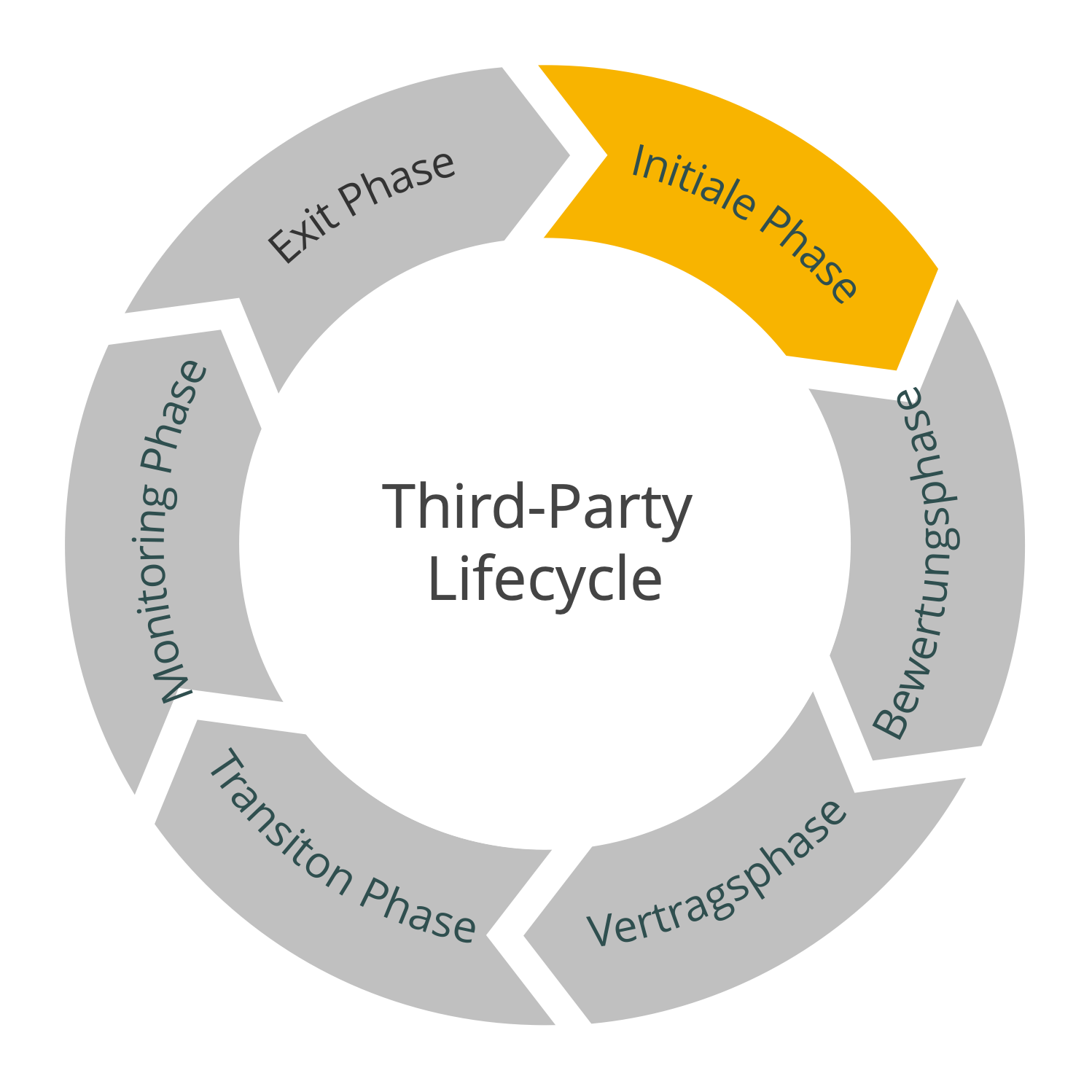
Graphic illustrating third-party lifecycle management. A pie chart visualises six phases, with the first phase, “Initialisation”, highlighted in orange and explicitly focused on.

How do you manage third-party risks when the inventory is incomplete, contracts do not meet DORA minimum requirements, and there are no uniform assessment criteria? This case study shows how a European asset manager has reorganised its third-party risk management – in a practical, DORA-compliant and sustainable manner.

More information

You face similar challenges – we can support you with practical, implementable solutions

Let us discuss your specific situation

30 minutes for more clarity – book your appointment

Free & non-binding · 30 minutes · Remote